
The Allure of Upcycled Silverware Jewelry
A Brief History of Spoon Ring Crafting
In the 17th century, English farmers began bending worn spoon handles into rough rings. They called them “posy rings,” often engraving love poems inside the metal. This was the humble birth of silver rings made from spoons.
Each spoon carries its own patina, its own history of stirring tea or measuring medicine. The upcycling process preserves those marks. A skilled artisan hammers, anneals, and shapes the silver without erasing its past. I find that preservation utterly compelling!
- Original hallmark stamps remain visible
- Bowl patterns show through the band
- Hand-hammered texture distinguishes every ring
Modern South African jewellers have revived this tradition, sourcing silverware from antique shops and estate sales. They understand that silver rings made from spoons are more valuable for their stories than their silver content.
Why Handcrafted Silverware Rings Stand Out
Every silver ring made from spoons carries a physical record of its former existence. Microscopic scratches from daily use remain visible under magnification. A soup spoon that served a hundred Sunday lunches becomes a band with a texture no machine can replicate.
South African crafters source these pieces from antique dealers and estate auctions. The silver content often proves secondary to the provenance. A monogram, a maker’s mark, a slight bend from decades of gripping, these details create jewellery with genuine emotional weight. Silver rings made from spoons connect wearers to domestic rituals long forgotten.
- Hallmarks remain legible inside the band
- Bowl edges create organic contours
- Hand planishing leaves subtle facets
Wearing one alters your relationship with the object. The metal warms against your skin, recalling its journey from cutlery drawer to finger.
The Sustainable Appeal of Repurposed Silver
Every year, tonnes of silver cutlery vanish into landfill while mining operations chew fresh ore from the earth. Upcycling flips that equation. A single spoon recycled into a ring saves the energy and environmental damage of producing new metal. The sustainable appeal of repurposed silver is brutally practical.
Consider the numbers. Recycled silver requires roughly a third of the energy of virgin silver extraction. And the material quality remains sterling. That’s a rare bargain in eco-conscious fashion.
- No new mining sites carved into the landscape
- No chemical runoff from ore processing
- No wasted heirloom cutlery collecting dust in a drawer
Silver rings made from spoons carry far less environmental baggage than newly minted jewellery. The metal already exists, refined and worked decades ago. Wearing one is a quiet act of defiance against the disposable culture that surrounds us.
From Heirloom Tableware to Everyday Accessory
Few items in your home can pull off a second career as body adornment. Silver rings made from spoons manage the trick with unapologetic charm. One day they are serving pudding, the next they are accessorising your thumb. That transformation is simple, but the appeal is layered.
A spoon ring carries the physical memory of your grandmother’s kitchen, or a mismatched set from a charity shop. The monogram may be indecipherable, the pattern long discontinued. None of that matters. What matters is the ring works with a linen dress as easily as a denim jacket. It is an everyday accessory with a past.
The most telling detail? Each ring has a unique slant, a particular curve, a slight irregularity that no factory could replicate. That imperfection is the draw.
Selecting the Right Spoons for Ring Making
Identifying Genuine Silver vs. Silver-Plated Spoons
A jeweller in Pretoria once told me, “A plated spoon will break your heart before it breaks your tools.” I have never forgotten that warning. Silver rings made from spoons require a solid sterling core, and too many vintage spoons carry only a thin silver coating.
Three tests separate the genuine from the plated:
- The file test: genuine silver stays bright, plated metal shows a pinkish layer.
- The weight test: silver feels heavier than stainless steel of the same size.
- The scent test: silver has a faint metallic smell, plated pieces often smell coppery.
I trust the file test most. It never lies, and that certainty makes all the difference!
Popular Silverware Patterns and Their Aesthetic
Choosing the right spoon for a ring begins with the handle’s width and the pattern’s relief. Deeply embossed patterns like Francis I or Berceuse produce bold, sculptural silver rings made from spoons, while flatware with a brushed finish lends itself to sleek, modern bands. The bowl matters less, but its stamp tells you the silver’s origin. I often search for pieces with worn engraving, because the fading edges soften the final form.
For anyone starting out, consider these classic patterns:
- Repousse: high-relief floral motifs ideal for statement rings
- Chantilly: flowing scrolls that sit comfortably on the finger
- Princess: lightweight and plain, perfect for stackable bands
The pattern dictates the look and how the metal bends. A deep relief can obscure a solder seam, while a smooth surface shows every mark. Choose accordingly.
Assessing Spoon Condition for Quality Rings
The truth about a spoon comes out when you twist it. A handle that holds neatly on the dinner table may crack behind the neck the moment you curl it into a mandrel. I test each piece before I commit. That is a tedious step, but it separates patient makers from hasty ones! The hollow spots and subtle ridges you feel with a thumb often predict whether the form will bend cleanly or fracture. This is exactly where the condition of the raw flatware becomes the deciding factor for durable rings.
When I gather cuts for silver rings made from spoons, I look for blanks that present no structural compromise. I have learned to trust my fingers over the eye alone:
- Trace the handle for a ridge or a raised fold; that signals an earlier crush.
- Press the bowl edge to feel any residual spring from industrial rolling
- Flip the handle and inspect the back for half moons left by a knife
The backside of the handle is where old knife strikes accumulate. A heavy groove across the centre causes sudden breaks at the shank. Place every candidate on a flat block and roll it through your fingers. The next moment, a perfect ripple across the entire load will show as a clear spot that never stays flat.
Where to Source Antique and Vintage Spoons
Every South African city hides a cache of orphaned silver, and the best silver rings made from spoons begin right there. A Durban charity shop, a Cape Town estate liquidation, a Johannesburg flea market stall where mismatched cutlery sits in a biscuit tin. I source most of my material from these overlooked corners rather than auction houses, because pieces that spent decades in everyday use carry the structural character that matters.
When selecting blanks, I look for:
- Pre-1940 serving spoons with rolled edges, since older manufacturing leaves more metal in the shank
- Undamaged bowls with no hairline cracks at the bowl-to-handle junction
- Handles without monograms, since engraving thins the metal and creates fracture points
Many antique dealers in South Africa keep drawers of mismatched flatware they will part with for very little. Asking directly for the broken sets often reveals pieces that others dismissed, and those pieces become the most honest silver rings made from spoons.
Understanding Silver Content and Hallmarks
The selection of a blank is a tactile negotiation. A spoon that sits heavy in the palm, with a shank that tapers modestly toward the bowl, will hold the ring’s form without complaint. I pass over pieces that feel hollow or springy, regardless of their outward polish. The metal must ring clean when tapped.
When assessing silver content, hallmarks offer guidance, yet they never replace a careful eye. On South African flatware, look for these stamps:
- The word Sterling or the abbreviation Ster.
- The figure 925, the international standard for fine silver.
- The British lion passant, common on pre-1930s imports.
These marks confirm that your silver rings made from spoons carry genuine metal through every hammer stroke. Unmarked pieces demand caution, but the metal’s weight and patina can confirm what the stamps do not.
Step-by-Step Techniques for Crafting Your Own Ring
Essential Tools and Materials for Beginners
Annealing the spoon handle is your first step. Heat the metal until it reaches a dull glow, then cool it rapidly. This process removes internal stress and allows you to shape the silver without cracking. Once softened, you measure the handle and cut a strip at the correct width.
You will need a set of basic tools before starting:
- A jeweller’s saw for clean cuts
- A ring mandrel to size the band
- A rawhide mallet for gentle forming
- Fine files and sandpaper for finishing
Wrap the strip around the mandrel and hammer it evenly. Mark the seam, then solder it closed using a torch. After the joint cools, file away excess solder and polish the surface. Your silver rings made from spoons emerge with character from the original pattern.
Measuring and Marking the Spoon Bowl Area
The bowl holds its own geometry. Run your thumb across its concave face and feel how the silver thins toward the rim. That variation matters. Place the bowl face down and let it settle. Scribe a line around the area you intend to use, always leaving a little extra metal for the seam.
A set of dividers or a vernier caliper gives you the exact circumference. Mark the centre point first, then work outward in even strokes. The curvature of the bowl means the inside radius differs from the outside radius, so take both readings before you cut. This discipline is why silver rings made from spoons require patience at this stage. Measure, mark, then measure again.
Cutting and Annealing the Silver for Shaping
Cutting demands a jeweller’s saw with a fine blade. Clamp the bowl to a bench peg and saw along the scribed line, leaving extra metal for finishing. Paraffin wax on the blade reduces binding. The metal yields easily, which makes silver rings made from spoons forgiving for novices. I find that letting the saw do the work prevents bent blades.
Annealing softens the work-hardened silver. Use a butane torch to reach a cherry glow, then quench in water. Dry thoroughly before shaping over a mandrel. The sequence:
- Cut the blank.
- File edges.
- Anneal.
- Quench.
- Shape.
Each step is deliberate. Overheating causes dullness, so steady torch work is essential. The heat resets the crystal structure, turning brittle metal into something you can form. A rawhide mallet shapes the band without marring. This is where the spoon becomes a ring, temporarily soft and ready for the next phase.
Bending and Forming the Ring on a Mandrel
The annealed blank now bends where you want it. Place the metal across a steel mandrel at the spot corresponding to your measured ring size. Use both thumbs to press the silver around the taper. The material yields gracefully, which is why silver rings made from spoons forgive a hesitant hand. Work from the center outward, rotating the mandrel after every few presses.
Keep the ends aligned. A gap that opens on one side signals uneven pressure. Correct it immediately by shifting your hold.
- Press the blank around the mandrel with firm thumb pressure.
- Rotate and repeat, moving from center to edges.
- Tap stubborn curves with a rawhide mallet.
When the ends finally meet, the band holds its shape on its own. This moment marks the transition from flatware to wearable. The remainder of the work, sizing and finishing, comes next. Silver rings made from spoons reward this measured, deliberate pace with a smooth, even round.
Soldering, Finishing, and Polishing Techniques
Soldering a ring seam demands a steady torch and a stubborn streak. Silver rings made from spoons often refuse to align perfectly on the first try. Use hard solder for the initial join, then medium solder to fill pinholes. Work in a dimly lit room to see the solder flow. That orange glow signals you to back off. A poorly soldered seam haunts you during finishing.
After it cools, file the excess solder with a fine needle file. Smooth the band with wet/dry sandpaper from 400 to 1200 grit. Then apply polishing compound. For silver rings made from spoons, a felt wheel on a rotary tool delivers that mirror finish. Clean off the compound with warm soapy water. Dry immediately.
Never skip the pickle bath after heating. It removes fire scale; otherwise you buff black oxide into the metal. Steps:
- Soak in pickle for 10 minutes.
- Rinse in clean water.
- Polish with jeweler’s rouge.
Common Mistakes and How to Avoid Them
Measure your finger twice before cutting the spoon bowl. A ring that fits at midday feels tight by evening. Cut with a jeweler’s saw and let the blade do the work. Forcing the cut leaves rough edges and wasted silver.
Silver rings made from spoons are ruined during annealing. Heat the metal until it turns a faint straw color, then stop. Overheating causes the spoon to melt or warp. Underheating leaves the metal brittle and prone to cracking.
- Work in small hammer strokes when shaping on the mandrel.
- Rotate the ring after every few strikes to keep the band even.
- Check the size against a ring gauge before soldering.
A warped band is the most common mistake beginners make. It comes from hammering one side too hard. Rotate the mandrel as you work. Silver rings made from spoons need a gentle touch, a steady rhythm solves most problems.
Creative Design Ideas for Silver Spoon Rings
Modern Minimalist Spoon Band Styles
The most elegant rings often begin as humble cutlery. For silver rings made from spoons, the creative possibilities narrow elegantly to minimal forms. The spoon handle, when shaped with precision, becomes a band with a clean profile. Designers now favour unadorned surfaces, letting the silver’s natural lustre carry the design.
Consider these minimalist approaches:
- Rounded edges that soften the ring’s profile
- Matte finishes that hide fingerprints
- Narrow widths for delicate hands
In South African markets, I have watched artisans blend this simplicity with local repurposing traditions. The result is a ring that feels contemporary and grounded. Modern minimalist spoon band styles achieve their charm through subtraction. Each curve and polished facet serves a purpose. The spoon’s former life now rests on your finger.
Hammered and Textured Finish Options
The charm of silver rings made from spoons often lies in what the maker chooses to remove. But sometimes, the more interesting path is adding texture. A hammered finish transforms the smooth handle into a dimpled surface that plays with light in unexpected ways. It also hides the micro-scratches that come from daily wear, a practical advantage for a ring that never leaves your finger!
Artisans use a variety of methods to create these surfaces on silver rings made from spoons:
- Peening with a ball-peen hammer for a classic stippled look
- Cross-hatching with a fine blade for a subtle grain
- Brushed satin textures that catch light softly
Each technique changes the character of the ring. I have seen heavily textured pieces feel rugged and organic, while a lightly brushed one retains the elegance of the original spoon.
Oxidized and Antique Patina Looks
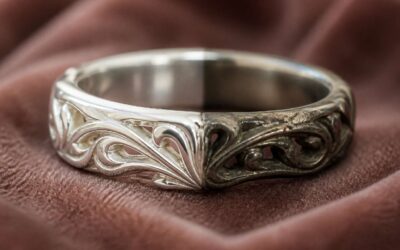
Oxidation transforms a humble spoon into a relic. I have watched silver rings made from spoons darken in a bath of liver of sulfur, their surfaces shifting to charcoal and shadow. The contrast is exquisite when the high points are buffed back to a gleam, leaving the recessed areas dark!
For a true antique patina, artisans often use:
- A sulfur solution for deep, smoky blacks.
- Boiled egg yolks for a softer, sepia toned tarnish.
- Deliberate abrasion to expose worn edges reminiscent of heirloom silver.
Each method produces a different effect. Some craftspeople seal the oxidation with wax, preserving that darkened beauty. Others let the ring age naturally, allowing time to add its own character. All silver rings made from spoons carry this history, a memory of candlelit dinners and forgotten hands. The result is never pristine, and that is precisely the point.
Combining Spoon Silver with Other Metals
In the alchemy of metalsmithing, there is a temptation to let the spoon remain purely itself. But some of the most striking silver rings made from spoons emerge when the silver meets a stranger. I have paired the soft gleam of sterling with the warm blush of copper, and the result feels like a relic from a forgotten world.
Consider the marriage of metals:
– Copper strips for a rose gold glow against the silver’s cool white.
– Brass inlays for a hint of old-world opulence.
– Blackened steel cores for a dramatic, gothic contrast that still holds the light.
The method is unforgiving and requires patience. You must solder the pieces at the correct temperature, watching for the moment the solder flows without melting the spoon’s delicate bowl. When the work is done, the ring wears a narrative of two materials, each with a different memory. The contrast can be subtle. A thin band of gold inside the silver shank creates a secret shimmer, a private detail that only the wearer knows. Or the design can be bold, with multiple metals woven together like a dark tapestry. These combinations often become the most enduring silver rings made from spoons, because they speak to a distinct vision. In South Africa, where the light is harsh and revealing, the interplay between metals catches the eye in unusual ways. The silver carries the past; the other metal carries the new. Together, they form a piece that defies the simple category of repurposed tableware. A copper rim might wear away with time, leaving a trace of its presence on the silver. That imperfection is part of the charm. The making of these rings is a negotiation between the metals, each one demanding its own treatment. The results are never accidental. They are studies in contrast, durability, and the restless nature of beauty. I find that the most successful pieces are those where the spoon’s pattern remains visible, the florals or the guilded edges peeking through the metal’s embrace, as if the original object is still whispering its own name.
Featuring the Spoon Handle as a Statement Piece
The handle is the most ignored part of a spoon, and that is a mistake. The bowl gets the attention, yet the stem carries the monograms, the flourishes, and the maker’s marks. When you forge silver rings made from spoons, the handle provides a longer canvas. You can spiral it into a coiled band or flatten it into a wide cuff that displays the entire pattern.
I keep returning to these three approaches:
- Leave the finial intact as a raised bezel.
- Twist the shank for a barley sugar effect.
- Taper the handle end toward the knuckle.
In South Africa’s harsh light, the handle’s engraved details cast shadows the bowl never will. A ring built this way functions as sculpture, a relic of Victorian table manners that now sits against a modern finger. The original owner’s initials remain legible, turning the piece into a private conversation.
Caring for and Maintaining Your Handcrafted Silver Ring
Daily Wear Tips to Prevent Tarnishing and Damage
Silver rings made from spoons carry a quiet history, but daily wear introduces challenges. Contact with lotions, sweat, and cleaning agents accelerates tarnishing. I have found that removing the ring before washing hands helps more than any polish. Water alone does less damage than prolonged moisture. A soft cloth wipe after each wear works wonders!
Store the ring away from sunlight and open air. Tarnish builds when silver sits idle.
For stubborn discoloration, use a gentle silver cloth, never a dip that strips patina. Watch for scratches too! Take off the ring during vigorous activity, avoid perfume and sunscreen contact, and check the band for loose stones or bends monthly. These small habits protect silver rings made from spoons for years.
Safe Cleaning Methods for Silver Jewelry
Silver rings made from spoons demand a cleaning regimen that borders on the liturgical. The safe method, honed through trial and error, involves lukewarm water, a drop of mild dish soap, and a soft bristled brush. You scrub gently, respecting the original patina rather than attacking it.
Here is the order of operations:
- Rinse the ring under running water to dislodge loose debris.
- Work the soapy brush around the band and any textured crevices.
- Rinse again and pat dry with a lint free cloth.
This method suits the silver’s fragile nature. Ultrasonic cleaners rattle the setting loose. Commercial polish pastes leave residue in the crevices. For silver rings made from spoons, a gentle touch beats any machine. The spoon’s former life as cutlery means its silver is softer than you expect. Buff with a polishing cloth only when dullness persists.
Polishing and Restoring the Shine
Tarnish on silver rings made from spoons is not a flaw. It is a timeline. Each dull patch records a morning of rooibos tea, a Sunday roast, a generation of hands around a dinner table. Restoring the shine means revealing that history without erasing it.
A jeweller’s rouge cloth works best with slow pressure and straight strokes. Circular motions deepen microscopic scratches. For textured bands, a soft bristle brush carries the rouge into hammered valleys where flat cloth cannot reach.
Signs that polishing is due:
– A grey film that survives regular washing
– A cloudy reflection in bright light
– A roughness you can feel with a fingertip
Some silver rings made from spoons call for a gentle patina, others for a brighter gleam. The correct approach depends on the spoon’s original finish. Handcrafted silver rings made from spoons should carry a softened glow, never a blinding mirror. That softness is the signature of honest silverwork.
Storage Solutions to Keep Your Ring Pristine
Most South African homes have a drawer where silver goes to sulk. That drawer, full of loose coins and lost cufflinks, is the worst place for silver rings made from spoons. Trapped moisture does the damage, even in Gauteng’s dry winters.
Store them with intention. A soft cloth pouch or a separate compartment in a jewellery box keeps the surface untouched. Add a silica gel packet or an anti-tarnish strip to absorb what the air holds. Consider these habits:
- Keep the ring away from rubber, elastic, and wool, which tarnish silver faster.
- Never store in the bathroom. Steam and salt air belong to the ocean, not your ring.
- Use a sealed zip bag for long periods of not wearing.
The result is a ring that stays as bright as the dinner table it came from. Silver rings made from spoons deserve that much.
When to Seek Professional Repair or Resizing
A handcrafted spoon ring becomes part of your daily rhythm, but silver is a soft metal. Work hardening from the bending process keeps its structure, yet daily pressure can cause the band to warp. Inspect the ring occasionally for hairline cracks or oval distortion. This is where the artisan’s touch matters.
- The ring catches on clothing or feels tight
- You notice a thin crease near the bowl seam
- The band has bent out of round
These are signs that the spoon’s original metallurgy has changed. A jeweller who works with repurposed silver can rework the piece without losing the pattern. Resizing silver rings made from spoons requires careful annealing and re-forming. A simple stretching tool often snaps the solder seam. Seek a smith who understands the material’s history. The right repair extends the story of the silver and preserves the comfort of the wearer. Silver rings made from spoons deserve a craftsman’s attention.
Where to Find and Purchase Unique Spoon Rings
Top Online Marketplaces for Handmade Jewelry
Nearly 70% of handmade jewelry buyers now shop online, yet finding truly unique silver rings made from spoons requires knowing where to look. Etsy remains the largest hub for artisan silverware rings, but don’t overlook African marketplaces like the Craft and Design Institute’s online store or the Mzansi-based platforms that feature local silversmiths.
For a deeper selection, consider these established sources:
- Etsy for vintage and custom commission work
- eBay for antique spoon lots with genuine silver
- Loot and Bidorbuy for South African sellers
Each marketplace offers different authentication standards, so examine seller reviews and hallmark closeups. Sustainably sourced spoons often appear on Instagram Shops, especially from small-scale jewelers who document their process.
Supporting Independent Silversmiths and Artisans
Behind every silver ring made from spoons stands a silversmith with a story. When you buy directly from the artisan, you receive more than jewelry. I have found that the most memorable pieces come with a conversation about the original utensil’s provenance.
Independent silversmiths in South Africa often work from small studios in Johannesburg, Cape Town, and Durban. They sell at weekend markets, through Instagram, and by word of mouth. Seek them out at craft fairs or arrange a studio visit.
Consider commissioning a custom piece:
- Bring your own family spoons for a personal design
- Request a specific silverware pattern be preserved
- Ask to watch the shaping process in person
Each commission supports a maker who keeps this craft alive. These silver rings made from spoons carry the maker’s mark alongside the original hallmark.
Custom-Ordering a Personalized Spoon Ring
Finding an exceptional spoon ring requires knowing where to look. Beyond the predictable craft markets, I recommend visiting estate sales and antique warehouses across the Cape Winelands. These spaces often hide caches of sterling spoons that silversmiths transform into wearable pieces. You might even secure an unfinished ring directly from a jeweller’s bench.
Custom ordering offers a different kind of pleasure. Bring a cherished heirloom spoon, or request your mother’s wedding pattern be recreated. The silversmith will assess the bowl’s integrity, anneal the metal, and shape it around a mandrel while you watch. These silver rings made from spoons become something more intimate when you participate in the process. Ask about preserving the original hallmark or placing the handle detail at the band’s front. Each decision shapes the final object, making the ring uniquely yours.
Pricing Expectations and Quality Indicators
Most South African antique fairs have a table where the proprietor insists their dented silverware is “vintage patina.” This is where you can find silver rings made from spoons at reasonable prices. The trick is to flip the spoon over. Check the bowl’s underside for deep scratches or worn spots that suggest the metal was already thin before being transformed. A quality maker will work around these flaws, but they cannot fix something that is essentially a silver ghost.
Pricing expectations vary based on a few factors:
– The silver content (sterling versus plated)
– The complexity of the band’s shaping and finish
– The silversmith’s reputation and whether they hallmark their work
– Any restorations needed on the original spoon
You can expect to pay between R400 and R1,200 for a handcrafted piece from a local artisan. Silver rings made from spoons from established studios in Cape Town or Johannesburg might command R1,500 or more, especially if they feature intricate handle detailing.
Quality indicators are straightforward once you know what to examine. Look at the band’s interior. A proper ring will have a smooth, polished surface with no sharp edges or solder residue. The hallmark should be crisp and legible, not a blurry afterthought. Ask the silversmith how they finished the piece. A well made ring will have undergone multiple sanding stages, not a single buffing wheel pass. The metal should feel solid and substantial when you slide it on, not paper thin. Genuine silver rings made from spoons will also show a slight weight difference compared to plated alternatives, a distinction you will notice immediately.
Ethical and Sustainable Shopping Considerations
The most compelling silver rings made from spoons rarely wait behind glass counters. They surface at neighbourhood flea markets, estate sales, and small-batch craft fairs where silversmiths work openly at their benches. Johannesburg’s Arts on Main precinct and Cape Town’s Old Biscuit Mill host makers who specialise in repurposed cutlery.
Ethical shopping adds another layer. Buying silver rings made from spoons avoids newly mined metals and keeps old tableware from landfills. Ask directly about a spoon’s origin. A responsible maker traces the piece to an estate auction or family donation and discloses whether the ring is sterling or plated.
Consider these sources:
- Local artisan markets like the Neighbourgoods Market
- Online platforms such as Superbalist’s handmade section
- Specialist vintage dealers who source from Cape farms
The most reliable purchases come with a conversation. A silversmith who explains the sourcing and finishing process will offer a dependable ring. The hallmark on a genuine piece is a promise, not decoration.
0 Comments